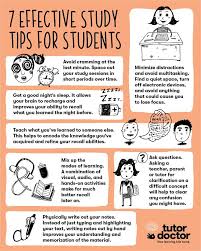

How to Reduce Exam Fear Before Entering the Hall


Kwara State University (KWASU) is aware of recent misleading information circulating on social media, specifically a write-up by Wahab Oba, which attempts to undermine the university's reputation and that of the Kwara State Government. The writer's claims of a "deafening silence" regarding recent robbery incidents affecting KWASU students in private accommodations are unfounded and misrepresent the active measures being taken to enhance security in Malete. Key Highlights: - Security Progress : KWASU and the Kwara State Government, under the leadership of Governor AbdulRahman AbdulRazaq, are making significant strides in restoring safety in the Malete community. Recent efforts have led to the apprehension of some robbery suspects, with ongoing investigations to capture those still at large. - Collaborative Efforts : The university management is working closely with security agencies, local government officials, and student representatives to tackle security challenges. A joint security committee has been established to ensure safety in private hostels, including the deployment of professional vigilantes. - Enhanced Security Measures : Increased security personnel, including additional police and NSCDC officers, are actively patrolling the Malete area. Restrictions on movement are being implemented to further safeguard students and residents. - Community Engagement : The ongoing collaboration between KWASU, the Moro Local Government Council, and the community is crucial in maintaining a safe environment. The local government is formalizing security measures into bylaws to ensure sustained protection. KWASU urges the public to disregard misleading narratives and remain informed about the proactive steps being taken to ensure the safety and security of all students and residents in Malete. Stay Informed, Stay Safe : KWASU is committed to transparency and will continue to provide updates on security developments. For more information, please share this message and encourage your peers to stay connected with official university communications. Smarter tools, better results - Download AbS today on Apple App Store HERE and unlock your academic edge Credit: AbS Posted By: Lyve #Blog
Continue readingDid you choose Computer Science as your course of study when you registered for JAMB? If yes, then this page is specially for you. It is believed that candidates may have checked their JAMB results after the release of the exam results. One thing is to check your JAMB result after sitting for the exam; another, most important thing is to know if the score has met the benchmark for your desired course of study. If you do not know the JAMB Cut Off Mark for Computer Science and you have chosen this course as your course of study, we urge you to read this page carefully to discover this information. What is the Cut Off Mark for Computer Science? The Joint Admissions and Matriculation Board (JAMB) has set the general minimum cut-off mark for admission into Nigerian universities at 140 and that of Polytechnics at 100 for the 2025/2026 academic session. However, Computer Science is a highly competitive course, and most universities set higher cut-off marks for it. Generally, the JAMB cut-off mark for Computer Science ranges between 180 and 250, depending on the institution and its admission policies. Some institutions may accept scores as low as 150, while others may require scores above 200. Mark does not guarantee admission, as universities may have additional requirements and limited slots. Therefore, aspiring Computer Science students should aim for higher scores to enhance their chances of admission. List of Universities that have Released their Cut Off Marks for Computer Science Here is a comprehensive table of Nigerian universities that have released their JAMB cut-off marks for Computer Science for the 2025/2026 academic session: University JAMB Cut-Off Mark for Computer Science University of Ibadan (UI) 70.75% aggregate score Federal University Lokoja (FUL) 62.00% aggregate score Lagos State University (LASU) 200 Lagos State University of Science and Technology (LASUSTECH) 180 Kano University of Science and Technology (KUST) 170 An Overview of What to Expect from the Field of Computer Science as a Student The field of Computer Science is a dynamic and ever-evolving discipline that encompasses the study of computers, computational systems, and the principles behind software and hardware development. As a student or aspiring professional in this field, you can expect to engage with a wide range of topics that equip you with both theoretical knowledge and practical skills applicable across industries. Here is an overview of what to expect from the field of Computer Science: Dynamic and Evolving Discipline Computer Science involves the study of computers, computational systems, software, and hardware development. The field is constantly advancing with emerging technologies. Core Focus Areas Emphasizes problem-solving through algorithms and data structures. Includes extensive training in programming languages such as Python, Java, C++, and JavaScript. Specializations and Subfields Artificial Intelligence and Machine Learning Cybersecurity Software Engineering Databases and Data Management Networking and Cloud Computing Human-Computer Interaction Academic Foundations Strong emphasis on logical reasoning and mathematical thinking. Common coursework includes discrete mathematics, computational theory, and systems analysis. Hands-on experience with industry tools and software development environments. Career Opportunities Wide range of roles including software developer, data scientist, cybersecurity analyst, IT consultant, systems architect, and more. Employment opportunities across various industries: finance, healthcare, education, entertainment, and government sectors. Skills Developed Critical thinking, creativity, analytical skills, and adaptability. Ability to innovate and solve real-world problems using technology. #Universities #Pos tUtme
Continue readingUniversity of Abuja Management Enforces 'No Work, No Pay' The University of Abuja management has announced the implementation of a 'No Work, No Pay' policy for any staff found absent from their duty posts. This decision comes as a faction of the institution's Academic Staff Union of Universities (ASUU) continues its industrial action. Vice-Chancellor Abdul-Rasheed Na’Allah stated that a circular has been issued, mandating all academic staff to resume their teaching duties. Failure to comply will result in the forfeiture of salaries. Professor Na’Allah emphasized the principle of not paying for work not performed, adding that the university management is actively addressing the grievances raised by the striking ASUU members. However, ASUU has indicated that no resolution or agreement was reached following a meeting held over a week ago. The union reported a lack of communication from the university since that meeting. Background of the Strike The institution's ASUU chapter initiated an indefinite strike on May 2nd. Their grievances include accusations of the university management violating its establishment laws, particularly concerning staff appointments and promotions in the absence of a governing council. The union also alleges that the university has shortchanged ASUU in the establishment of the UniAbuja Microfinance Bank, despite ASUU being a stakeholder and shareholder since 2017. Sylvanus Ugoh, the union's chairperson, also criticized the recent advertorial for the position of a vice chancellor to succeed Na’Allah. He argued that appointing a vice chancellor is the sole responsibility of the university's governing council, which is currently non-existent. The absence of governing councils in Nigerian tertiary institutions, including UniAbuja, stems from a directive issued by President Bola Tinubu last June, which dissolved all government parastatals. The ASUU national body recently issued a two-week ultimatum to the Nigerian government, demanding the reinstatement of councils whose tenures have not expired and the reconstitution of those whose tenures have lapsed. ASUU contends that the lack of governing councils has led to numerous irregularities within the universities. Despite these ongoing disputes, the University of Abuja management, under Vice-Chancellor Na’Allah, maintains that steps are being taken to resolve the issues in contention with the union, with agreements reportedly reached on some matters.
Continue readingAre you looking to advance your education and career? Ignatius Ajuru University of Education (IAUE) invites qualified candidates to apply for its Postgraduate Programmes for the 2025/2026 academic session. Whether you are considering a Doctorate, Master’s, or Postgraduate Diploma, IAUE offers both full-time and part-time options to fit your schedule. Available Postgraduate Programmes: - Postgraduate Diploma (PGD, PGDE, PGDL) - Master’s Degree (MA, MEd, MLS, MSc, MSc.Ed) - Master of Philosophy (MPhil/PhD) - Doctorate Degree (PhD) General Admission Requirements: Postgraduate Diploma (PGD, PGDE, PGDL) - A first degree from a recognized university (Pass Degree or Third Class). - Higher National Diploma (HND) in a related field. Master’s Degree (MA, MEd, MLS, MSc, MSc.Ed) - A first degree with at least a Second Class Honours in a related field. - Postgraduate Diploma at credit level in a related field. Master of Philosophy (MPhil/PhD) - A Master’s degree in a related field, with a CGPA lower than 2.8 on a 4.0 scale or equivalent. Doctorate Degree (PhD) - A Master’s degree in a closely related field with a CGPA of 2.8 and above on a 4.0 scale. Note: All applicants must have five (5) credit passes in O’level, including English and Mathematics. Important Application Steps: 1. Visit the IAUE Website: Go to [IAUE Postgraduate School]( http://www.iauoe.edu.ng ). 2. Register Online: Click on Postgraduate School from the admissions menu and fill out the registration form. 3. Pay Application Fees: - PhD: N40,600 - Master’s: N35,600 - PGD/PGDE/PGDL: N25,600 - Brochure Fee: N7,600 4. Complete Registration: Fill in all required fields, upload your passport photo and credentials, and submit your application. 5. Download Forms: Retrieve your referee forms and transcript labels for further processing. Duration of Programmes: - Postgraduate Diploma: Full-time – 12 months; Part-time – 18 months. - Master’s Degree: Full-time – 18 months; Part-time – 24 months. - Doctor of Philosophy (PhD): Full-time – 36 months; Part-time – 48 months. Closing Thoughts: Don’t miss your chance to elevate your career through advanced education at Ignatius Ajuru University of Education. Ensure your transcripts reach the Postgraduate School before the admission offer. Begin your application today and take the first step towards achieving your academic goals! Please kindly share this post with others For further details on the programmes and admission requirements, visit the [IAUE Postgraduate School]( http://www.iauoe.edu.ng ) webpage. Unlock your full potential - Start your academic journey with AbS App on Google Play Store HERE Credit: AbS Posted By: Uwem #Blog
Continue readingIn a world where education is often seen as a privilege, a remarkable story emerged from the Kuje Medium Security Custodial Centre in Abuja, Nigeria. Imagine a place filled with despair and hopelessness, yet within its walls, a transformative journey was taking place. Six inmates, against all odds, were conferred academic degrees by the National Open University of Nigeria (NOUN), proving that the power of education can indeed break barriers. A Journey of Resilience The ceremony, held in December 2025, was not just another event; it symbolized hope and redemption. As the Controller-General of the Nigeria Correctional Service (NCoS), Sylvester Nwakuche, addressed the audience, the atmosphere was thick with emotion. He praised the graduating inmates for their resilience and commitment to learning, despite the challenges of incarceration. His words resonated deeply, highlighting how education can act as a beacon of light in the darkest of places. Degrees Earned Behind Bars The six graduates completed various programs at NOUN, including two Master’s degrees in Peace Studies and Conflict Resolution, along with four Bachelor’s degrees in related fields. Each degree represented not just academic achievement, but a step towards personal transformation and societal reintegration. These qualifications signify the importance of prison education as a tool for rehabilitation, allowing inmates to acquire practical skills and renewed confidence. A Collaborative Effort The successful partnership between NOUN and the NCoS reflects a growing recognition of the role education plays in reforming lives. Nwakuche emphasized that education equips inmates with the necessary tools for a productive life post-release. This collaboration shows that even within a correctional facility, the pursuit of knowledge is not only possible but essential for personal growth. The journey of these inmates teaches us that no matter our circumstances, the pursuit of knowledge can lead to redemption and a brighter future. This story is a testament to the resilience of the human spirit and the unwavering belief that education can truly change lives. Final Thoughts As we move forward, let us advocate for inclusive education, not just within the confines of traditional institutions, but also in spaces where it is desperately needed. Together, we can help build a society where everyone has the opportunity to learn, grow, and thrive, regardless of their past. Stay Inspired With AbS Please don't fail to share this post with your family and friends For Past Questions, Admission activities, Cut-Off Marks, Post-UTME Updates - You can join our WhatsApp Group https://chat.whatsapp.com/IRGg5NfNFbO0PuV0GhxTPR?mode=ac_t For more study tips, exam guide and free learning resources - Download the AbS App on Apple App Store https://apps.apple.com/us/app/abs-tech/id6502200174 Connect with AbS Blog today, your trusted source for campus updates and so much more https://www.abstechconnect.com/blogs Credit: AbS Posted By: Lyfe #Blog #AbS
Continue reading (9).jpeg)


 (23).jpeg)